Executive Summary
- How long a roofing material is quoted to last is just an estimate because there are many factors influencing roof lifespan, such as installation quality, the environment it is subjected to, and how well it is maintained.
- Without proper care, roofing systems in the Portland metro area may experience premature deterioration due to the prevalence of rain, moss, wind, and tree debris.
- Regular inspections and preventative maintenance can help preserve existing roof life by catching issues like damaged shingles, deteriorating flashing, debris buildup, and moisture problems early.
- Instead of solely using age to determine whether to repair or replace a roof, it is important to consider its current condition, maintenance history, and performance.
A Roof’s Age Doesn’t Tell the Whole Story
Roofs are investments, and like any investment, people want to know what the payoff is projected to be. So, when exploring different types of roofs, homeowners regularly focus on which material is expected to last the longest. While some materials historically yield longer roof lifespans than others, actual longevity depends on much more than the product itself.
There are many factors influencing roof lifespan, including how the roof was installed, how well it was maintained, and what it is exposed to over the years. Therefore, two asphalt shingle roofs installed in the same year can be in dramatically different condition later down the road. This is especially true in the Portland metro area due to the varying conditions.
The guide below encourages homeowners to look beyond the installation date when evaluating their roof, because even though age provides useful context, the roof’s current condition can communicate much more about how much useful life remains.
The Material Rating Isn’t a Countdown
One of the most common roofing myths is that a material’s advertised lifespan is a promise to the homeowner. For example, when someone sees a “30-year” synthetic or asphalt shingle, they may assume their roof will automatically last three decades. In reality, a rating like that usually just reflects expected performance under defined conditions—it does not guarantee that every roof will reach that age.
Top 5 Factors that Influence a Roof’s Longevity
Aside from which material you choose and when the roof was installed, five of the most noteworthy factors influencing roof lifespan are:
- Installation quality – Ensuring proper fastening, flashing, ventilation, underlayment, and other installation details can make your roof last longer.
- Roof design – Roof pitch, drainage, valleys, penetrations, and other design features influence how water and debris move across the system.
- Maintenance – Ignoring minor leaks, damaged shingles, clogged drainage systems, or debris and moss accumulation can accelerate deterioration.
- Weather exposure – Environmental conditions like wind, temperature changes, sunlight, and rain can affect roofing materials in different ways.
- Surrounding environment – Falling branches, leaves, needles, and other forms of tree debris can be harmful to roofs through direct damage and by trapping moisture and clogging drains.
Due to factors like these, a 20-year-old roof that has been carefully maintained may be in better condition than a 12-year-old roof if the latter experienced years of neglect, a poor installation, or more inclement weather.
Portland Weather Can Change the Equation
Since roofing materials have to perform in the environment where they are installed, the ones in the greater Portland area have a particularly difficult challenge due to the changing seasons and the proliferation of plant life. During the summer months, the sun may be beating down on a roof in Beaverton or Gresham; then, when it cools down, higher humidity levels can bring other issues.
Therefore, homeowners in northwest Oregon have to account for the following factors when considering roof lifespan.
Rain and Moss
For the last couple of decades, the city of Portland, Oregon, and surrounding areas have steadily received above-average rainfall. Sometimes, the rainfall nearly doubles what is seen in other parts of the contiguous United States, like when Portland got 59.42 inches in 2017 while other areas averaged out to 32.21 inches.
With rain repeatedly saturating roofing materials and surrounding components during Portland’s cooler months, shingles and other roofing materials can get worn down quicker than other parts of the U.S. This problem is exacerbated by the area’s susceptibility to moss growth, as moss can hold excess moisture against roofing materials rather than letting it drain away, further encouraging materials to break down.
Heat Waves
Portland’s increasingly hot summer heat waves can impact roofs as well. Repeated heating and cooling can cause roofing materials to expand and contract, contributing to premature wear through problems like:
- Cracking
- Curling
- Sealant deterioration
Unfortunately, the problem isn’t just heating and cooling cycles either—prolonged heat can also cause issues, predominantly by increasing attic temperatures and worsening moisture and ventilation problems. Over time, these effects can shorten roof longevity, making proper ventilation, regular inspections, and timely maintenance especially important.
Wind
Wind can also contribute to wear by loosening or damaging roofing materials, lifting shingles or blowing granules into the gutters. Sometimes, wind can also send branches, leaves, and needles from trees onto the roof that can combine with moisture and create conditions that accelerate deterioration.
The environment surrounding a roof is therefore one of the most important factors influencing roof lifespan. A roofing material that performs well in one setting may require more frequent maintenance in another.
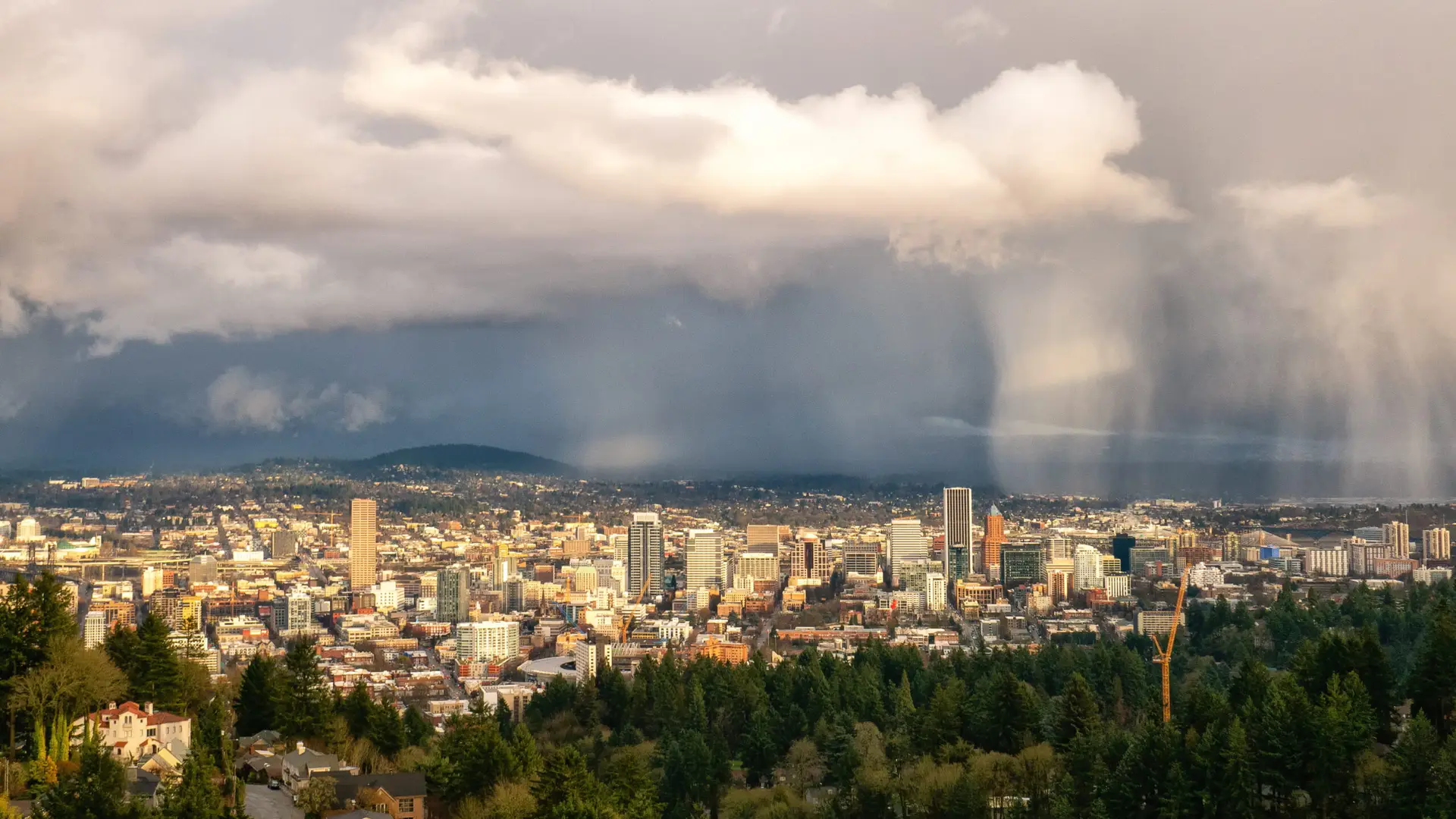
This is the downtown skyline of Portland, Oregon, as heavy rain clouds roll over the city, preparing to drench roofs.
Maintenance Can Extend the Life You Already Have
Homeowners sometimes treat roof maintenance as an optional expense that can be postponed until something goes wrong. However, preventative care can play an important role in preserving the roof you already have.
Routine inspections can identify relatively small problems before they develop into larger sources of damage. Depending on the roof and its surroundings, maintenance may include:
- Removing leaves, pine needles, fir needles, and other debris
- Treating moss growth
- Repairing damaged or deteriorating roofing materials
- Maintaining flashing around roof penetrations
- Addressing roof leaks and moisture concerns
- Checking drainage areas and valleys and cleaning gutters and downspouts
The goal is to keep small problems from becoming larger ones. A loose or damaged roofing component may be relatively straightforward to address when discovered early. If water begins entering the roofing system, however, the resulting damage can extend to underlayment, decking, insulation, or other components.
This changes the question homeowners should ask. Instead of only asking, “How old is my roof?” consider asking, “How well has my roof been maintained?” to get a much more useful picture of your roof’s potential remaining life.
A Roof Can Look Fine and Still Need Attention
A roof’s appearance can provide useful clues, but it does not tell the entire story. Some of the components most important to long-term roof performance are difficult to see from the ground.
Flashing, for example, protects vulnerable transitions around chimneys, vents, skylights, walls, and other roof penetrations. Deteriorated flashing may allow moisture to enter the roofing system even when the shingles themselves appear relatively normal.
Other concerns can also develop without creating an obvious visual warning. These may include:
- Exposed or improperly placed fasteners
- Damaged vents or roof penetrations
- Moisture intrusion beneath roofing materials
- Problems with drainage or ventilation
- Deteriorating underlayment
A homeowner who only evaluates the roof based on what can be seen from the driveway may miss these issues entirely.
Professional roof inspections provide another layer of information by evaluating the roofing system more comprehensively. Rather than relying exclusively on the roof’s age or appearance, an inspection from a legitimate roofing company can help identify current problems and provide a better understanding of its overall condition.

From the ground, a homeowner may not be able to see that this chimney stack has poorly maintained flashing, along with damaged mortar joints and debris accumulation in the nearby roof valley.
When Does Roof Age Become a Replacement Question?
Reaching a particular age does not automatically mean a roof needs to be replaced. A roof that has reached the upper end of its expected lifespan deserves closer attention, but the decision should still account for its condition and performance.
With that being said, roof replacement may become more appropriate when several warning signs begin appearing together, such as recurring leaks, widespread deterioration, extensive material damage, or increasingly frequent repairs.
The table below features some important considerations homeowners and their roofing contractor should take into account before making a final decision.
| Consideration | What It Can Tell You |
| Age | Provides context for how much service life the roof may have already used |
| Current condition and extent of deterioration | Shows whether the roofing system is still performing effectively and helps distinguish localized damage from widespread aging |
| Repair and maintenance history | Reveals whether problems are isolated or becoming increasingly frequent while giving insight into how well the roof has been cared for over time |
A roof with one localized problem may still have substantial useful life remaining. In contrast, a roof experiencing recurring problems across multiple areas may warrant a more comprehensive evaluation.
Think Beyond the Number of Years
The best way to maximize roof lifespan is to focus on the condition and care of the roofing system rather than waiting for an arbitrary number of years to pass.
Regular inspections can help homeowners understand how their roof is actually performing. Preventative maintenance can address issues before they become more expensive, while timely roof repairs can preserve roofing materials that still have useful life remaining.
Roof Life of Oregon is a great resource for people in the Portland metro area, where rain, moisture, moss, and surrounding vegetation can create ongoing maintenance demands. If you live in any of the areas we serve, we can help you take care of your roof, and we can give you an estimate on roof lifespan based on your unique situation.
Schedule a free roof inspection with our experienced team today to identify potential concerns and better understand what you can do to maximize its remaining service life.